Physical Address
304 North Cardinal St.
Dorchester Center, MA 02124
Physical Address
304 North Cardinal St.
Dorchester Center, MA 02124

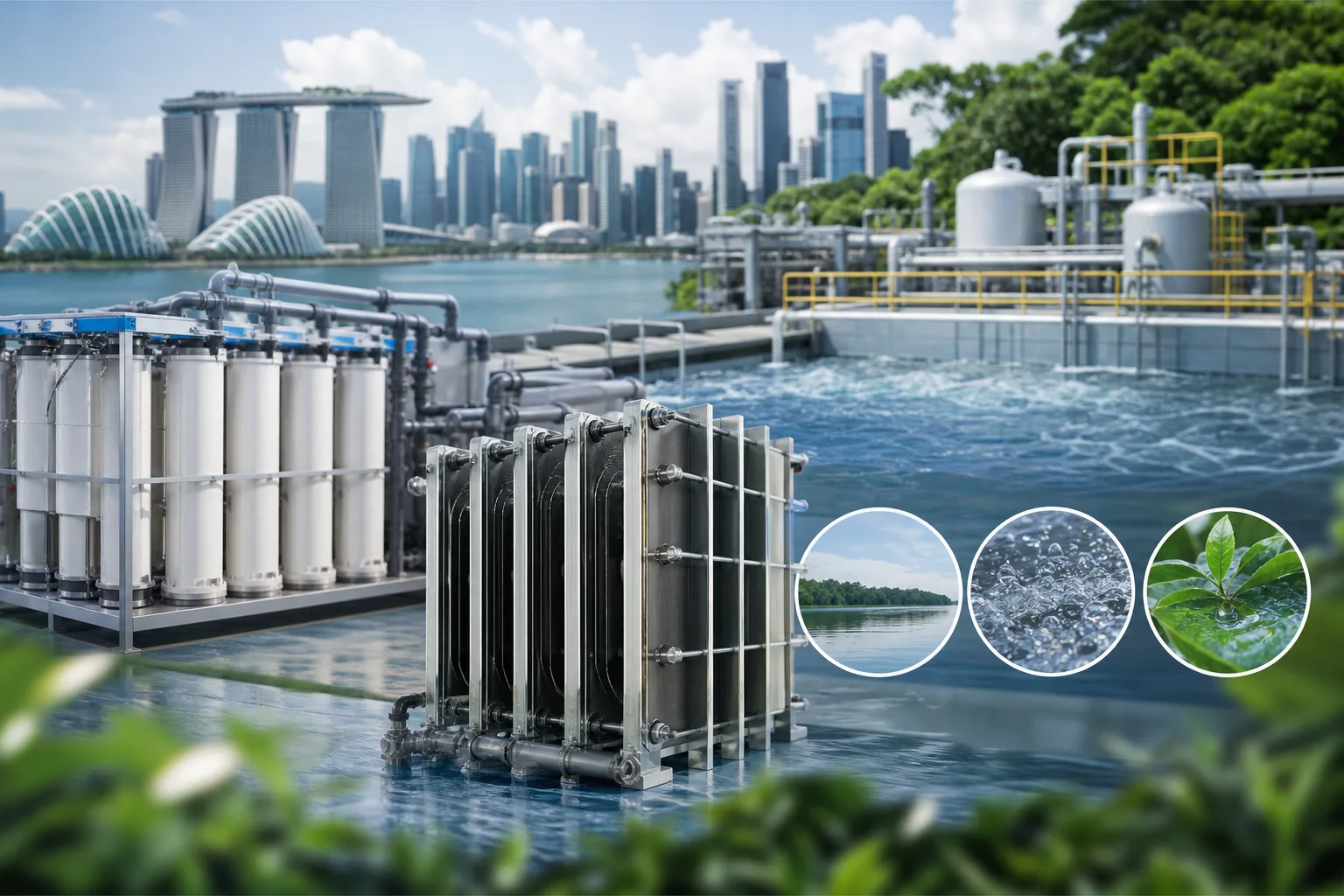
Explore three deployable salinity gradient energy technologies, focusing on practical integration, feed compatibility, and pilot readiness for sustainable energy projects.
You are reviewing a desalination expansion or sustainability plan when the same question returns: the brine carries a strong salinity difference, so why is the route from salinity gradient energy potential to a bankable project still unclear? Your team has feed chemistry, pretreatment, membrane performance, hydraulics, controls, concentrate management, and net energy to reconcile before any pilot earns approval. Singapore’s compact, highly engineered water infrastructure leaves little room for a system that works only on paper.
Most salinity gradient energy projects don’t have a basic science problem. They have an integration problem. The practical question is which option fits your stream and existing assets. The International Renewable Energy Agency describes the principle through the salt difference between freshwater, such as a river, and seawater. This comparison tests three membrane and electrodialysis options against resource inputs, conversion fit, environmental risk, and infrastructure demands. MediSun Energy approaches the opportunity through integrated brine management rather than an isolated power claim, although site-specific chemistry still determines the result.
You need more than a promising membrane name when moving from research to procurement. Supplier pages often describe a component, while you need evidence about feed chemistry, integration boundaries, brine handling, and pilot readiness.
This screen separates deployable membrane and electrodialysis products from academic concepts. It provides a consistent route from feed characterisation to technology fit and net-energy validation, without treating a supplier specification as proof of project viability.

Membrane products and complete electrodialysis systems are treated differently. A membrane is one stack component. A system also covers hydraulics, electrodes, controls, and operating interfaces.
Experimental nanoporous capacitive-mixing electrodes aren’t treated as directly comparable products. Research describes them as promising, but their development stage, system boundary, and procurement evidence differ from established membrane and electrodialysis options.
Use the same sequence before commissioning a pilot or requesting quotations:
Practical rule: You should not request a quotation until your feed characterisation and net-energy boundary are defined.
FUMASEP addresses the need for a replaceable membrane component rather than an unproven energy system.
FUMASEP ion-exchange membranes suit electrodialysis or Reverse Electrodialysis investigations. In a stack, alternating ion-selective membranes guide ion movement between streams with different salinities, supporting electrical output when feed chemistry, hydraulics, and stack design are properly matched. You get a component for screening and prototyping, not a complete brine-management plant or guaranteed generator.
Screenshot reference: The official FUMATECH FUMASEP product page identifies the membrane range. Treat pricing as a custom quotation unless FUMATECH supplies a public price.

Use FUMASEP when you need to compare membrane grades in a controlled stack trial before specifying equipment for a desalination or industrial feed.
FUMASEP gives you component-level control, but it can’t compensate for poorly characterised feed chemistry or weak pretreatment.
You can provide a representative feed analysis before selecting the membrane grade.
ASTOM’s Neosepta range gives you ion-selective materials to assess within a defined stack, feed chemistry, and operating envelope, without committing to a complete generator.
You still need to test salinity, organics, suspended solids, hardness, and cleaning demands together. Neosepta is a membrane family, not a packaged salinity gradient energy plant or universal answer for desalination brine.
Screenshot reference: ASTOM’s official Neosepta information identifies the membrane range and its available technical specifications for comparison.
Use Neosepta when you need to compare established ion-exchange materials in a controlled Reverse Electrodialysis or electrodialysis stack. Judge selectivity alongside resistance, hydraulics, spacers, pretreatment, and replacement planning.
Neosepta may suit your stack study, but selectivity doesn’t remove fouling control or replacement costs. Test the real Singapore feed stream beside alternatives rather than selecting from catalogue data alone.
You can run a side-by-side test with representative feed, cleaning conditions, and hydraulic design fixed.
When a salinity gradient energy project requires a stack, test platform, and integration path, a membrane sample isn’t enough. PCCell is assessed at the system level, helping you examine how equipment behaves around real feed streams.
The relevant boundary includes pumps, flow distribution, controls, pretreatment, electrical interfaces, monitoring, concentrate handling, and parasitic energy. A screenshot of the official PCCell site is a supplier reference, not proof of a commercial salinity-gradient-energy installation. Pricing is by custom quotation where it isn’t publicly listed.

Consider PCCell when your engineering team needs a pilot platform around an electrodialysis process, while retaining responsibility for feed characterisation, civil integration, and net-energy accounting.
You gain system-level relevance, but PCCell doesn’t remove membrane selection, civil design, or site-specific integration work. A weak request says, “Please quote an electrodialysis unit.” A stronger request says, “Please compare flow, salinity, pressure, power consumption, and waste-stream boundaries for our pilot.”
You need comparable pilot assumptions and an integration partner, not simply another membrane sample.
When you move from technical screening to procurement, first establish whether you’re buying a membrane or a wider equipment package. That distinction affects your pilot scope, integration work, and commercial conversation.
FUMASEP, Neosepta, and PCCell can be compared on the same terms below. The table separates component choices from system-level equipment, so you can match the option to your project boundary.

| tool | best for | strength | limitation | price band |
|---|---|---|---|---|
| FUMASEP ion-exchange membranes | Membrane screening and electrodialysis-style stack development | Replaceable membrane component for testing ion-selective materials | Feed chemistry, pretreatment and stack design determine practical performance | Custom quotation |
| Neosepta ion-exchange membranes | Comparing ion-selective materials in reverse electrodialysis or electrodialysis configurations | Membrane-range option for defined feed and operating conditions | Salinity, organics, scaling and cleaning burden remain site-specific | Custom quotation |
| PCCell electrodialysis systems | Controlled pilot work and broader stack-system integration | Addresses more of the equipment boundary than a membrane-only purchase | Pumps, controls, pretreatment, concentrate handling and parasitic energy still require project engineering | Custom quotation |
FUMASEP and Neosepta give you membrane procurement choices. PCCell gives you a broader electrodialysis equipment starting point, although your site still determines engineering requirements.
Treat membrane selection and system integration as separate decisions. MediSun Energy can help bridge that boundary when your project combines brine management, resource recovery, Reverse Electrodialysis, or CO₂ mineralization, though site-specific testing remains necessary.
You may be comparing desalination brine, concentrated reject, industrial wastewater, or mixed waste streams. The feed’s salinity, temperature, organics, hardness, suspended solids, and variability can change the right starting point.
Keep membrane screening separate from system design. A component study may suit a defined sample, while pumps, controls, pretreatment, cleaning, and concentrate handling belong in a controlled pilot or integrated project boundary.
| situation | better move |
|---|---|
| You need to screen membrane chemistry against a characterised brine sample | Start with a membrane-component evaluation using FUMASEP or Neosepta and define pretreatment and cleaning conditions |
| You need controlled pilot data with hydraulics and operating controls | Evaluate a PCCell electrodialysis platform and document gross output, parasitic load and concentrate handling |
| The feed is variable, organic-rich, scaling-prone or mixed with industrial waste | Run representative feed characterisation and pretreatment trials before choosing a membrane or stack |
| The project combines desalination brine, resource recovery and industrial decarbonisation | Discuss an integrated brine-management pathway with MediSun Energy, including Reverse Electrodialysis and CO₂ mineralization where suitable |

If you have characterised brine and a clear test boundary, begin with FUMASEP or Neosepta membrane screening. Then define pretreatment, cleaning, and performance criteria before committing to a wider stack.
When your feed changes or carries organics and scaling risk, test it before selecting technology. You need representative samples and pretreatment trials, not a membrane result from an idealised solution.
If your design includes hydraulics, controls, pumping, and concentrate handling, evaluate a PCCell platform or equivalent system basis. Your model should include parasitic energy, not only gross salinity-gradient output.
When your programme links desalination brine, resource recovery, and industrial decarbonisation, make the decision an integrated brine-management discussion with MediSun Energy. Reverse Electrodialysis may address energy recovery, while CO₂ mineralization may support resource recovery where the chemistry and economics fit. Site testing remains necessary.
Your project needs a decision record before it needs a membrane quotation. Without defined feed conditions, you can’t compare salinity gradient energy fairly or separate technical potential from avoidable operating load.
Start with one page. That brief gives suppliers, engineers, plant owners, and Singapore stakeholders a common boundary.
Describe your brine or waste stream so you can test whether the option fits.
Quantify the usable salinity gradient and pretreatment load. Include pumping, controls, cleaning, and concentrate handling before comparing output.
Ask each membrane or system supplier for results using the same feed, recovery target, test duration, and energy boundary. You need comparable data, not isolated peak performance.
Review intake, discharge, chemical handling, monitoring, safety, and maintenance with your plant owner, engineering partner, and relevant Singapore stakeholders.
If you want a faster way to do this, MediSun Energy assesses brine management, Reverse Electrodialysis, and CO₂ mineralization for desalination operators, industrial manufacturers, and infrastructure teams where site chemistry supports the fit. You can review its technical articles on integrated brine and resource recovery.




