Physical Address
304 North Cardinal St.
Dorchester Center, MA 02124
Physical Address
304 North Cardinal St.
Dorchester Center, MA 02124

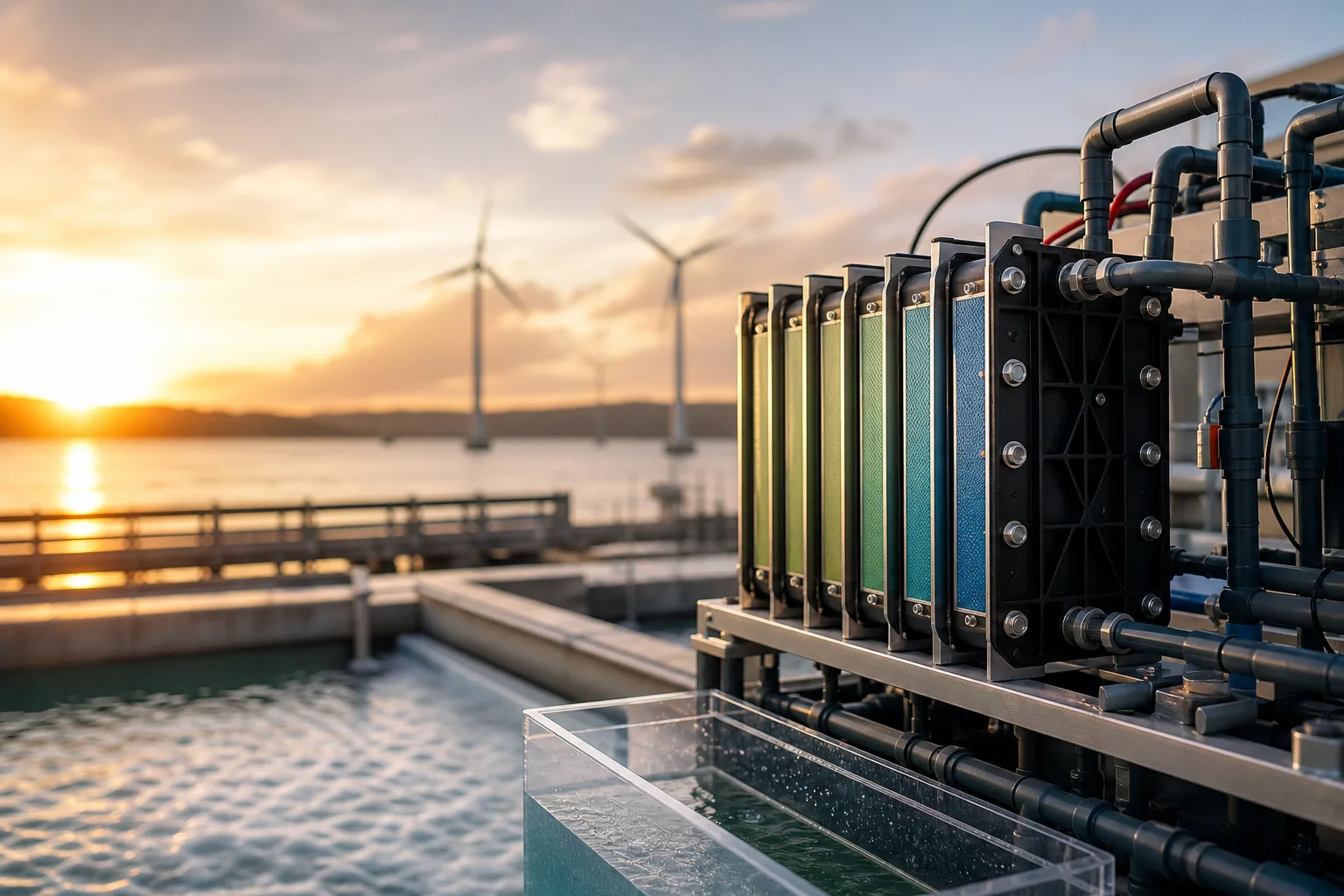
This guide explains how to design a reverse electrodialysis system by characterizing plant streams, matching chemistry, and setting pilot criteria to ensure reliable power output.
You have a brine line or industrial waste stream waiting for a decision, while a reverse electrodialysis proposal sits on your desk with the hard questions unanswered. Which stream belongs on each side of the stack? What electricity could your actual chemistry produce? Where would the unit connect to your pumps, tanks, controls, and discharge route? You need more than a membrane diagram.
Most operators don’t have a technology-definition problem. They have an integration and validation problem. Reverse electrodialysis is not electrodialysis reversal for water treatment. Electrodialysis uses electricity to move ions against their chemical potential, while reverse electrodialysis uses a salinity gradient to generate electricity. You need to match real streams before specifying equipment.
When an engineer says “reverse electrodialysis,” the useful response is a testable plant question. The brief must settle stream pairing, the energy pathway, pretreatment, interfaces, and the pilot evidence needed to support a decision. MediSun Energy can help connect your desalination brine or industrial waste stream to a practical system concept, although feed chemistry and site conditions still determine what the unit can deliver.
Your power estimate starts with two measured streams, not a membrane catalogue. If the salinity difference is weak, unstable, or poorly distributed, you may specify a larger stack without gaining useful output.
Treat desalination brine and the lower-salinity stream as plant inputs with their own chemistry, flow, and temperature. That discipline connects the salinity gradient to maintenance planning and prevents headline membrane-life figures from disguising integration risk.

In reverse electrodialysis, alternating cation-exchange and anion-exchange membranes form high- and low-salinity compartments. Open Energy Information describes this arrangement as a stack of membranes creating separate salinity channels. The two streams then pass through their assigned compartments.
Positive ions move through cation-exchange membranes, while negative ions move through anion-exchange membranes in the opposing transport pathway. That separation creates an electrochemical potential, which you measure across electrodes as a battery-like electrical output. Open Energy Information reports that saltwater and freshwater transport can create charged poles similar to a battery.
Opposing ion transport through reverse-electrodialysis membranes creates charged poles similar to a battery, according to Open Energy Information.
Reverse electrodialysis uses a salinity difference to generate electricity. Electrodialysis reversal is a different operating approach that periodically changes electrical polarity to reduce fouling during ion separation. You should not use an electrodialysis reversal specification as a substitute for a reverse electrodialysis energy model.
A reported maintenance-planning comparison places electrodialysis membrane life at approximately 10 years, versus roughly 1.5 years for RO membranes. Treat that comparison as a planning reference only. Stream chemistry, temperature, flow, scaling tendency, pretreatment, membrane selection, and plant integration determine actual service life.
Your pilot brief should record both streams’ composition, conductivity or salinity, flow range, temperature, and likely scaling constituents. It should also define pretreatment limits and the intended electrode, power-conditioning, and discharge interfaces. MediSun Energy can help connect those measurements to a brine-to-value concept, although site chemistry still limits what the system can deliver.
Practical rule: Characterise both streams under real operating conditions before you specify stack size or claim power output.
Start with measured plant streams, not a generic membrane diagram. Your design must show what enters the system, what leaves it, and where operators isolate or bypass the equipment.
Reverse electrodialysis generates electricity through controlled mixing between two water bodies with different salinities, according to Open Energy Information. A useful pilot brief connects chemistry, hydraulics, electrical interfaces, and acceptance tests.

Record your low- and high-salinity sources, flow range, temperature, variability, and complete ion mix. Your brine may contain sodium, magnesium, calcium, chloride, sulphate, and bicarbonate, not sodium chloride alone.
Weak: “Desalination brine, 60 m³/day.”
Strong: “Intake reject brine, 45-60 m³/day, 28-32°C, with sodium, magnesium, calcium, chloride, sulphate, and bicarbonate tracked weekly.” An unmeasured composition change is a failure signal that sends the design back to sampling.
Check solids, scaling risk, pretreatment limits, electrode materials, membrane compatibility, hydraulic paths, and stack configuration. The design is ready for the next review when each stream has a defined pretreatment and flow window. Unexpected scaling or pressure loss requires more testing.
Specify voltage and current measurement points, power-conditioning equipment, pumps, valves, bypasses, concentrate routing, controls, and safe isolation. Your tie-in drawing is complete when operators can start, stop, sample, drain, and isolate the stack without interrupting the wider plant.
MediSun Energy can connect brine and industrial waste streams to this integration plan, although site chemistry still limits the achievable output.
Set targets for voltage, current, power density, fouling rate, operating stability, and concentrate handling before procurement. A pilot fails its next-stage test when output drifts, fouling rises, or concentrate cannot meet its approved route.
A stack rarely fails with a clear alarm. You usually see weaker output, a rising pressure drop, damaged membranes, or a pilot result that cannot be repeated. Each symptom can have several causes, so check the first likely cause before changing equipment.
Compare voltage, current, flow, pressure, and chemistry together for a more reliable diagnosis. The table below turns real brine conditions into practical checks before you approve commercial sizing.

If you see weak or fluctuating output, check both feed streams across operating cycles. You may have an insufficient salinity difference, changing flow, temperature shifts, or poor distribution through the stack. Don’t adjust polarity before confirming the streams.
| symptom | likely cause | first fix |
|---|---|---|
| Weak or unstable electrical output | Insufficient or variable salinity difference between the two feed streams | Measure both streams over operating cycles and confirm concentration, flow, and temperature at the stack |
| Rising electrical resistance or falling current | Fouling, scaling, suspended solids, or inadequate pretreatment | Review pretreatment and pressure-drop trends, inspect the stack, and apply an approved cleaning protocol |
| Membrane swelling, cracking, or rapid performance loss | Chemical incompatibility, oxidants, extreme pH, or unsuitable industrial contaminants | Compare the complete feed chemistry with membrane and electrode compatibility limits before restarting |
| Pilot results do not match commercial expectations | Testing synthetic sodium chloride rather than representative mixed-ion brine | Repeat testing with real or compositionally representative streams containing relevant ions and variability |
| Uneven flow or unexpected output polarity | Incorrect hydraulic routing, blocked channels, valve position, or polarity configuration | Verify flow paths, isolation valves, electrode connections, and operating sequence against the pilot design |
When resistance rises, review pretreatment, suspended solids, scaling indicators, and pressure-drop trends together. You may need to isolate the stack, inspect channels, and use only the approved cleaning procedure. A cleaning step that ignores membrane chemistry can create a second failure.
Unexpected hydraulic imbalance can indicate a blocked channel, incorrect valve position, pump instability, or reversed routing. Verify the flow diagram against the installed pipework, then check electrode connections and the polarity sequence before restarting.
Synthetic sodium chloride can make performance appear more predictable than your mixed-ion brine allows. Repeat the pilot with real or compositionally representative streams before commercial sizing, and include expected variability. MediSun Energy can support integrated brine management and resource recovery planning, but site chemistry still determines membrane selection and pilot validity.
A reverse electrodialysis PDF is a technical reference covering membrane arrangements, ion transport, stack design, and experimental methods. You can use it to understand terminology, compare research approaches, and prepare questions for suppliers. It cannot replace site-specific stream sampling or pilot validation, because your brine chemistry, flow conditions, and fouling risks determine whether the proposed design is suitable.
Electrodialysis reversal uses applied electricity to move ions through ion-exchange membranes for water purification or desalination. You operate the system with periodic polarity reversal, and some designs also reverse flow, to reduce deposits and support membrane maintenance. This differs from reverse electrodialysis, which generates electricity from the chemical potential difference between streams rather than consuming electrical power to separate ions.
Electrodialysis reversal, or EDR, is the abbreviation for a water treatment process that uses external electrical energy and ion-selective membranes. EDR documents may mention polarity reversal, flow reversal, cleaning, and deposit control. EDR does not mean reverse electrodialysis. Reverse electrodialysis uses salinity differences between streams to produce power, so keep the two system objectives separate during procurement and design review.
Your next procurement meeting needs a defined engineering task, not another generic technology request. Show which streams enter the system, how they connect to existing equipment, and what evidence will justify a scale decision.
A one-page brief gives your plant team, engineering partner, manufacturer, or public-sector programme a shared reference. Everyone can review the same assumptions before equipment selection begins.
Prepare this one-page stream-and-integration brief with MediSun Energy for review. It turns an early discussion into an auditable task and leaves room to reject, revise, or scale the reverse electrodialysis route on evidence.
If you want a faster way to do this, MediSun Energy helps desalination operators, industrial manufacturers, engineering partners, and public-sector planners define streams, integration requirements, and pilot questions through its reverse electrodialysis and brine-management insights.




