Physical Address
304 North Cardinal St.
Dorchester Center, MA 02124
Physical Address
304 North Cardinal St.
Dorchester Center, MA 02124

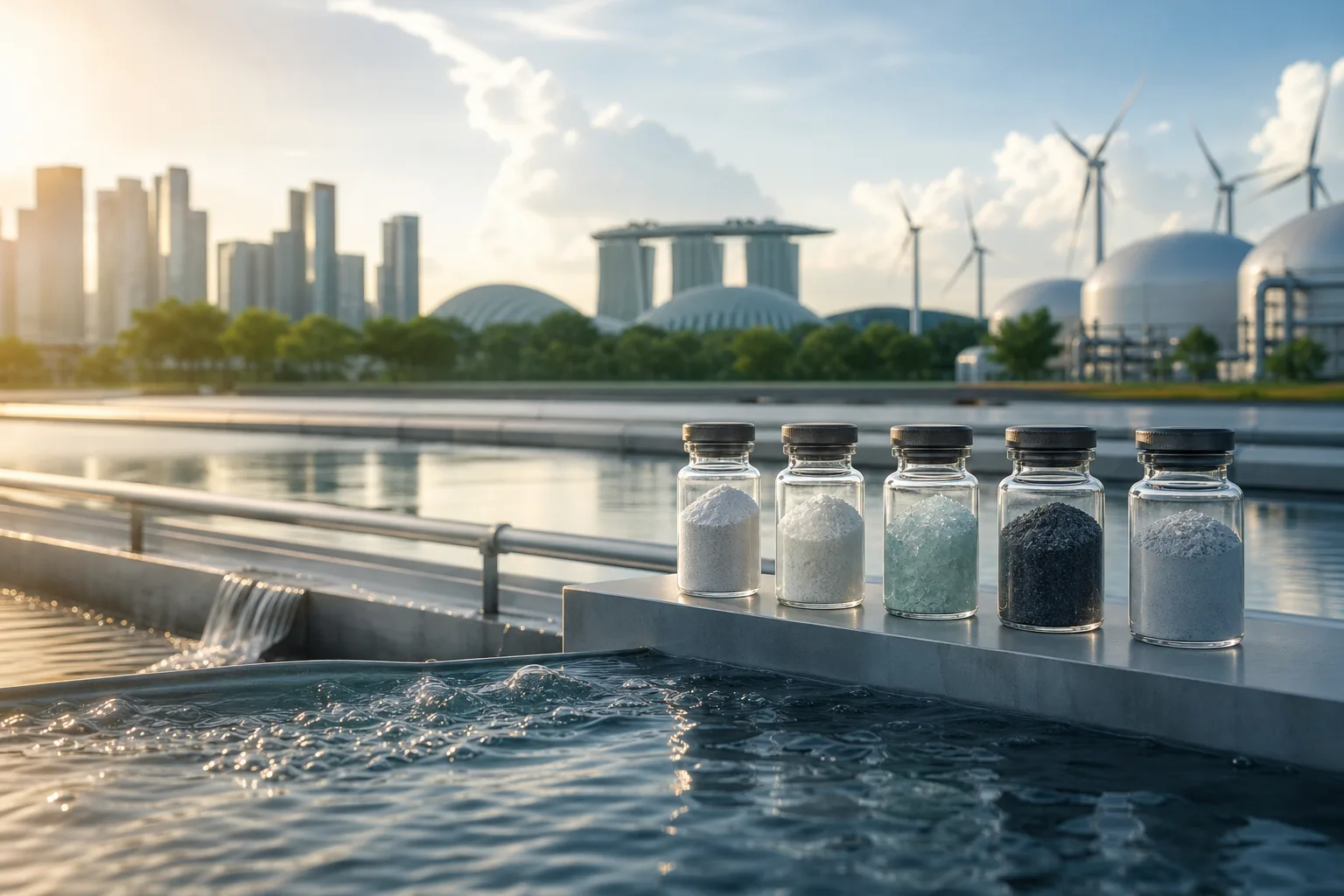
Explore how desalination brine can be screened and processed to recover lithium and other critical minerals efficiently, balancing purity, energy use, and compliance.
You’re reviewing the morning brine report when another concentrated stream leaves the plant. Energy costs are climbing, discharge scrutiny is tightening, and decarbonisation targets are becoming harder to explain when disposal is the only plan. Lithium and Critical Mineral Recovery from Desalination Brine starts with a practical question: can your site turn a waste stream into value without adding unacceptable technical, financial, or regulatory risk?
Most desalination operators don’t have a mineral recovery problem. They have a project-screening problem. A laboratory result may show lithium or another critical mineral, but it won’t tell you whether your Singapore stream can produce a saleable, compliant product after impurities, energy demand, residual-brine effects, and operating costs are included.
When someone asks what can be recovered from desalination brine, the useful answer isn’t a mineral list or a diagram of modular equipment. You need representative brine data, a defined product, interference testing, closed mass and energy balances, and safeguards that fit your discharge and regulatory obligations.
MediSun Energy provides an integrated brine-management reference through resource recovery, Reverse Electrodialysis, and CO₂ mineralization, although each site still requires its own technical and economic proof. The goal is a defensible pilot decision, not a technology shopping list.
You may find lithium, magnesium, calcium, or other named minerals in your desalination brine report. That finding gives you resource potential, not a saleable product. Your real decision is whether the stream can support a recovery train that meets a product specification without creating an expensive residual problem.
Desalination brine may contain source minerals at twice the concentration found in regular seawater, according to AZoMining. That sounds promising, but you still need to test concentration, purity, energy demand, treatment burden, and Singapore compliance together. Your project is only as strong as its weakest balance.

Your laboratory result should connect each target to flow, mass, recovery yield, impurities, and an end use. Research on the Sea4Value project identifies magnesium, lithium, and scandium as critical recovery targets, according to AZoMining. It also describes a process addressing ten minerals and metals, including lithium, magnesium, calcium, and rubidium. A broad target list can show opportunity, but it cannot prove that your plant should recover everything.
You can compare three routes: a single-mineral train with simpler product control, a multi-mineral train with more recovery value and greater separation complexity, or an integrated brine-management route that combines resource recovery with residual-stream treatment. MediSun Energy offers the last type through resource recovery, Reverse Electrodialysis, and CO₂ mineralization, although your site still requires independent testing and economic proof.
Your target needs enough mass to matter and enough purity to sell. Before advancing it, document feed flow, target mass, recovery yield, impurity removal, energy use, reagent demand, residual-brine quality, and disposal route. A concentrated stream can still fail if purification consumes too much electricity or produces a residual that your discharge pathway cannot accept.
Practical rule: Do not advance a target until your mass balance, treatment burden, product specification, and end use are documented.
For your Singapore project, define the acceptable product and discharge outcome before comparing equipment suppliers. If you cannot close the mass and energy balances, specify the recovered material, and explain the residual pathway to the relevant compliance stakeholders, keep the target at screening stage. Recoverable value begins with a closed balance, not a mineral list.
“Recoverable value begins with a closed balance, not a mineral list.”
A Singapore desalination operator cannot choose a recovery route from a single laboratory result. You need a representative view of the brine, the plant’s operating changes, the discharge pathway, and the product a buyer would actually accept.
Your screening pack turns uncertain resource potential into a reviewable project brief. It lets you estimate target mass, identify calcium interference, select analytical methods, set acceptance criteria, and begin an early permitting review before experiments consume time and budget.

State the intended product specification before selecting calcium precipitation, nanofiltration, crystallisation, or another route. You should document purity, moisture, form, packaging, likely buyer, and acceptable impurities. Record the existing discharge route, flow limit, residual chemistry, and review requirements for Singapore authorities.
Sea4Value illustrates why staged validation matters. AZoMining reported that the project involved 16 partners across eight countries, with laboratory work planned for 30 months, followed by an 18-month mobile-laboratory phase. Those figures describe that project, not a Singapore schedule. Your evidence pack must set a site-specific timeline.
The selected route now needs an operating sequence. Treat each stage as a gate, not as permission to buy equipment.
A failed gate does not end the project. It tells you whether to change the target, manage the residual stream, or stop before pilot costs grow.

Take representative brine samples across operating conditions, then measure flow, salinity, lithium, calcium, magnesium, sulphate, silica, organics, and contaminants. You are done when the concentration range and daily mass flow reconcile with plant records.
Test calcium removal, scaling control, and pretreatment demand before you assess selective recovery. Calcium precipitation followed by nanofiltration is a useful test hypothesis, not a universal design. You are done when calcium control is measurable and membrane or electrode fouling stays within an agreed limit.
Choose the sequence from your feed chemistry and buyer specification. You might test nanofiltration, solvent extraction, or staged ion management, while Reverse Electrodialysis from MediSun Energy may support energy-efficient ion separation. Sea4Value combines solvent extraction with solvometallurgy in pursuit of battery-grade lithium carbonate, according to AZoMining on 21 October 2024.
Weak sequence: “Recover lithium first, then find a use for the waste.” Strong sequence: “Control calcium, separate lithium, assay the product, and define the residual brine route.”
Run controlled tests against a named product grade, not a vague purity target. You are done when recovery, selectivity, impurity carryover, and product assays repeat across samples. AZoMining reported that Sea4Value uses ten technological solutions to pursue high-purity extraction with reduced environmental impact.
Reconcile every input, product, chemical, waste stream, energy demand, and discharge route. You can then assess whether CO₂ mineralization connects an industrial waste stream with residual-brine control. Recommend a pilot only when the mass, energy, cost, and environmental balances agree.
When recovery falls short, you may be tempted to add another membrane, reagent, or recovery stage. That reaction can hide the real problem. Identify the operating symptom first, then test the most likely cause under controlled conditions.
A multi-mineral concept does not prove that every target belongs in one train. You need separate evidence for selectivity, product quality, energy demand, and residual-stream control before changing the process.

If you see low lithium or target recovery, first check whether calcium or other competing ions are consuming separation capacity. Reanalyse major ions and compare pretreatment options before changing the recovery stage. MediSun Energy’s integrated approach can connect recovery with residual-brine management, although it cannot remove the need for stream-specific chemistry and testing.
| symptom | likely cause | first fix |
|---|---|---|
| Low lithium or target recovery | Calcium or other competing ions interfere with the selected separation | Characterise major ions and run a controlled pretreatment comparison before changing the recovery stage |
| Poor product purity | Co-ion carryover or insufficient selectivity in concentration and separation | Define the product specification, assay the intermediate streams, and test an additional selective or polishing step |
| Rapid scaling or fouling | Calcium carbonate, gypsum, or suspended solids are not adequately managed | Review calcium, sulfate, carbonate, and solids data, then validate pretreatment under representative conditions |
| Unstable throughput | Feed variability, fouling, or an unrepresentative laboratory sample | Sample across operating conditions and compare flux, recovery, and cleaning response over repeated runs |
| Weak economics | Low target mass or energy-intensive concentration and treatment | Reconcile the mass and energy balance and compare single-mineral recovery with an integrated brine-management route |
Poor purity often begins before final polishing. Define the required product specification, assay intermediate streams, and check co-ion carryover before adding a polishing step. Rapid scaling also points to calcium, carbonate, gypsum, or suspended solids that your pretreatment has not controlled.
Weak economics may come from low target mass, energy-intensive concentration, or treatment burdens outside the recovery unit. Rebuild the mass and energy balance, then compare single-mineral recovery with a wider brine-to-value route.
You can have a promising brine assay and still lack a fundable project. Your decision must connect product quality, energy demand, residual control, and a credible route to offtake.
A modular, staged validation route gives you better control than a large equipment commitment. It doesn’t remove site-specific testing, and lithium revenue can’t carry your business case by assumption. Your next output should be a pilot gate, not a purchase recommendation.
Start today with one page. Your sheet should show:
MediSun Energy’s integrated brine-management perspective connects resource recovery with decarbonising desalination and heavy industry, although each site still requires its own testing and safeguards. The strongest project is not the one with the longest mineral list. It is the one that controls its residual streams and earns approval at the pilot gate.
If you want a faster way to screen this work, MediSun Energy supports desalination operators, manufacturers, engineering firms, and public-sector teams with integrated brine management, Reverse Electrodialysis, and CO₂ mineralization pathways. Its technical perspectives on brine-to-value projects can help you frame the next review.




