Physical Address
304 North Cardinal St.
Dorchester Center, MA 02124
Physical Address
304 North Cardinal St.
Dorchester Center, MA 02124

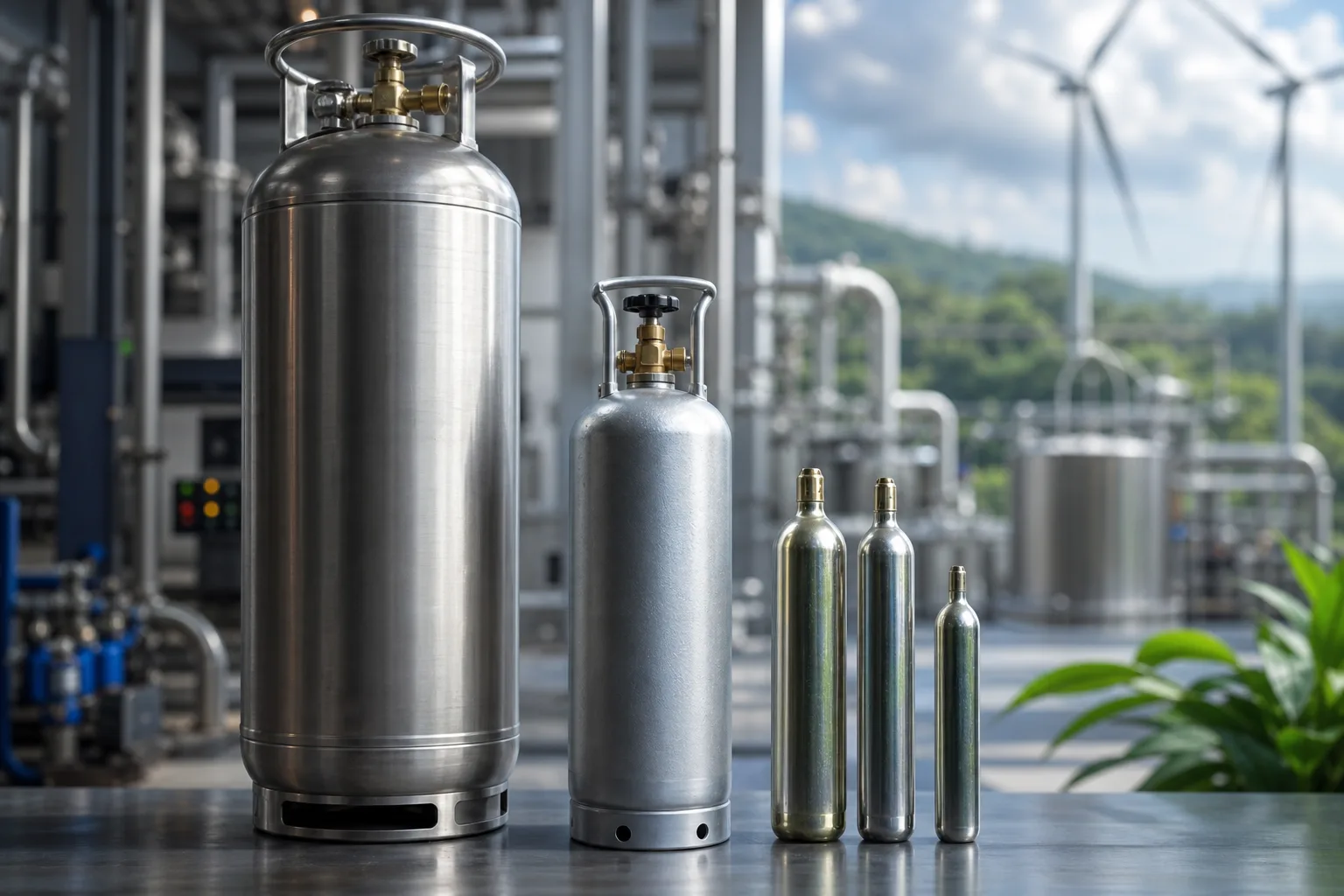
Operators learn to interpret CO2 cylinder pressure readings accurately by considering temperature, vessel contents, regulator stages, and process demands to ensure safe and reliable supply.
You’re watching a CO2 gauge in a Singapore plant room while a carbonation, dosing, or CO2 mineralization skid is running. The reading falls, and you must decide whether the supply is empty, a connection is leaking, the regulator is failing, or the process is drawing more gas. A wrong guess can interrupt production or expose you to an uncontrolled release.
Most operators don’t have a CO2 pressure problem. They have a pressure-interpretation problem. The same reading means different things when the vessel contains liquid CO2, gas only, or a small cartridge, and when the gauge sits before or after regulation. Temperature matters too.
When someone asks about CO2 Cylinder Pressure: What Operators Need to Know, a room-temperature range isn’t enough. You need to verify the supply format, gauge location, regulator condition, connection integrity, and process demand before changing equipment or opening a valve. This guide addresses those process-interface decisions, then compares storage formats with the pressure actually delivered to desalination and CO2 mineralization equipment.
Judge a CO2 supply by how reliably you can control it, not by the highest number on its gauge. A pressure value means little without temperature, phase, gauge location, regulator stage, and the downstream process requirement.
For a desalination or CO2 mineralization skid, the useful comparison covers pressure behaviour, measurement, connection risk, supply continuity, and safe end-of-life handling. That framework turns a reading into an operating decision.

Liquid CO2 can show broadly steady pressure while liquid remains, so you cannot treat a high reading as a reliable contents indicator. Temperature changes the reading, while the transition from liquid to gas changes what the vessel can deliver.
There is no single normal operating pressure for every CO2 bottle. Storage pressure depends on temperature, phase, vessel design, and the manufacturer’s procedure. Your process pressure is different and must come from the skid requirement.
A regulator reduces storage pressure in stages before gas reaches your equipment. A cylinder may have no pressure gauge because the vessel isn’t designed to show contents accurately. The regulator gauge shows pressure at its own location, not necessarily inside the cylinder.
A CO2 pressure regulator controls downstream pressure by restricting flow from the vessel and adjusting its outlet as demand changes. Check both regulator stages, fittings, and relief arrangements against site procedures.
Keep the vessel upright and secured, inspect connections, maintain ventilation, and follow approved changeover practice. A falling reading can indicate supply depletion, a leak, regulator trouble, or altered process demand.
Your changeover plan should cover reserve supply, compatible connections, operator checks, and safe end-of-life isolation. Never open or discard a vessel based only on a gauge reading.
Practical rule: Before changing equipment, match the reading to temperature, phase, gauge location, regulator stage, and your process requirement.
When a desalination or industrial mineralization skid consumes CO2 continuously, a bulk liquid vessel can provide a steadier supply than small bottles. You still need to separate vessel contents from process pressure. A high-pressure gauge doesn’t tell you how much liquid remains.
The key decision is the interface between bulk storage and controlled dosing. Bulk liquid CO2 suits sustained demand, but only when installation, ventilation, changeover, and measurement are designed around the process.

While liquid remains in the vessel, vapour pressure may stay broadly steady as temperature changes. Treating that gauge as a contents meter therefore tells you little. Use weighing, level indication, or another approved contents measurement to judge the remaining supply.
The pressure path should run from the storage vessel through regulator stages to the process interface. The vessel gauge shows storage conditions. The final regulator and process instruments show what your mineralization reactor or dosing skid receives.
Weak setup: North Tank A feeds the reactor through one unverified regulator, while an operator treats the vessel gauge as the remaining inventory.
Strong setup: North Tank A uses approved contents measurement, staged regulation, and a recorded process-interface check before CO2 enters the mineralization skid.
Bulk supply requires fixed installation planning, suitable relief arrangements, compatible connections, inspection access, and effective ventilation. You also need supplier access for delivery and a changeover plan that doesn’t expose operators to an uncontrolled release or interrupt the feed.
Bulk liquid CO2 suits sustained desalination or industrial mineralization demand. Planned reserve capacity matters where a reactor or dosing system can’t tolerate interruption. MediSun Energy may integrate this supply logic with CO2 mineralization, although its circular brine solutions still require site-specific storage and interface design.
Choose bulk liquid CO2 when measured demand justifies fixed infrastructure. Design the interface around controlled regulation and verified contents, not the headline vessel pressure.
You may need more capacity than cartridges without committing your plant to bulk storage. A refillable high-pressure bottle offers that middle ground, especially when CO2 demand changes between campaigns or skids.
You gain easier deployment and planned swapping, but portability shifts work onto your operators. The bottle still contains liquid and vapour, so pressure alone remains a weak measure of remaining mass.
Your gauge may stay broadly similar while liquid remains, then change quickly as the bottle approaches depletion. Treat bottle weight, supply records, and operating behaviour as stronger evidence than pressure alone.
Your regulator controls delivery pressure, not bottle contents. Weak setup: one bottle feeds a mineralization skid through an unverified regulator. Strong setup: a compatible regulator, staged reduction, isolation valve, and low-pressure alarm protect the process interface.
You still need secure storage, suitable lifting practice, current inspection status, compatible valves, sound hoses, relief arrangements, and ventilation for any released CO2. Bottle mobility doesn’t remove connection or handling risk.
You can plan a bottle exchange, but continuous brine treatment or CO2 mineralization may not tolerate manual changeover delays. Define a reserve, isolation sequence, and refill trigger before production depends on the bottle.
When your MediSun Energy integration outgrows bottle swapping, move to a documented industrial interface with mass-based replenishment, staged regulation, monitoring, and a defined changeover procedure.
You may use a 12-gram CO2 cartridge for a portable tester, a small dosing device, or occasional maintenance work. Treat it as a limited supply component, not a miniature plant utility.
Your cartridge choice must account for pressure behaviour, connection safety, discharge control, and supply continuity. That boundary matters when you support desalination or CO2 mineralization equipment.
Cartridge pressure changes with temperature, fill state, valve design, and the manufacturer’s rated service conditions. A nominal PSI figure therefore cannot serve as a universal operating limit.
You cannot assign one safe PSI value to every cartridge. Use the specific manufacturer’s rating and the approved holder.
A 12-gram cartridge has pressure governed by its contents and conditions, not its mass alone. The gauge reading may change as the cartridge cools during discharge.
Your regulator controls downstream delivery only when the cartridge, fitting, and device are compatible. It doesn’t make an unrated cartridge safe or extend its capacity.
Keep cartridges away from heat, impact, crushing, and unauthorised modification. Leaks commonly start at seals, threads, damaged valves, or incompatible fittings.
If you puncture a cartridge outside its specified device, you can create an uncontrolled release, rapid cooling, flying components, or a dangerous projectile. Never drill, crush, heat, or casually puncture one.
Repeated leaks usually indicate a damaged seal, cross-threaded connection, unsuitable fitting, faulty valve, or poor seating in the holder. Isolate the equipment if safe, ventilate the area, keep people away, and follow site emergency procedures.
Cartridge duration depends on flow demand, duty cycle, temperature, and how well the device controls discharge. A portable task may suit it, but no duration should be treated as guaranteed.
Discharge it only through the specified holder or appliance, following its written procedure. Don’t vent, puncture, or remove it from a pressurised connection casually.
A cartridge may suit occasional field work, but it’s a poor basis for continuous desalination or CO2 mineralization supply. Use this check before approving it:
Match the CO2 supply format to your actual operating profile, not to a convenient gauge reading. Continuous desalination and industrial mineralization demand a controlled interface, while pilot work and portable tasks need different arrangements.
Your decision should record storage format, temperature, mass or level, regulator stages, process demand, ventilation, relief path, and changeover trigger. That evidence lets you plan safely before MediSun Energy assesses a circular CO2 mineralization interface.
| situation | better move |
|---|---|
| Continuous desalination or industrial CO2 mineralization demand | Use a bulk liquid CO2 interface with staged regulation, ventilation, planned changeover, and mass or level monitoring. |
| Pilot team or lower-throughput site with variable demand | Use refillable bottles while documenting demand, handling requirements, regulator settings, and refill timing. |
| Portable or occasional task with low demand | Use a 12-gram cartridge only with the specified holder and within manufacturer-rated service conditions. |
| Pressure reading falls but process demand is unchanged | Check temperature, phase, gauge location, regulator stages, connections, and actual mass before replacing supply equipment. |
| Planning a MediSun Energy circular mineralization integration | Provide inventory, P&ID, pressure-control records, process demand, ventilation details, and changeover requirements for interface design. |

For continuous desalination, industrial dosing, or CO2 mineralization, choose a bulk liquid CO2 interface. You gain planned replenishment and steadier control, but you still need ventilation, relief routing, staged regulation, and a defined changeover procedure.
For a pilot team validating demand or a lower-throughput site, choose refillable bottles. You accept manual handling and refill scheduling in exchange for a less permanent installation.
Weak record: “CO2 pressure: 45 bar.” Strong record: “Bottle supply, 20°C, measured mass, regulator stages, demand profile, and changeover trigger recorded.”
For portable testing or occasional maintenance, choose a 12-gram cartridge only within the equipment maker’s limits. Bring your inventory, process flow diagram, demand profile, and pressure-control records to MediSun Energy for an integration discussion, without skipping basic controls.
At room temperature, a CO₂ bottle containing liquid CO₂ commonly shows roughly 800 to 900 psi, or about 55 to 62 bar. The exact reading changes with temperature, cylinder design, and whether liquid remains. Treat this as an indicative vapour pressure, not a universal set point. Follow the cylinder, regulator, and site operating limits.
Most CO₂ cylinders don’t have a built-in pressure gauge because internal pressure mainly follows temperature while liquid CO₂ remains. A nearly full cylinder and a partly used cylinder can therefore show similar pressure. Weighing the cylinder against its tare and gross weights gives a better inventory estimate. Use a downstream regulator gauge to monitor delivery pressure.
A CO₂ regulator reduces cylinder pressure to a controlled outlet pressure. A spring-loaded adjustment changes the force on a diaphragm, which opens or restricts the valve as downstream pressure changes. A single-stage unit may suit simple duties; two-stage regulation can provide steadier delivery as inlet conditions change. Set it only within the equipment and process limits.
A 12-gram CO₂ cartridge doesn’t have one fixed pressure rating. Its pressure depends mainly on temperature, while the cartridge is filled with liquid and vapour. At around 20°C, the CO₂ vapour pressure is typically near 57 bar, or 830 psi, but that isn’t a safe working limit. Check the cartridge marking and manufacturer’s specification before selecting connected equipment.
Your next shift can turn a gauge reading into documented control. Create one record that connects the CO₂ format, operating conditions, regulation, process demand, and changeover decision.
That evidence gives you a safer basis for a controlled, energy-efficient CO₂ mineralization interface. It also shows where the current plant arrangement needs engineering attention.
Format and duty: Record whether you use a bulk liquid vessel, refillable bottle, or cartridge, then state whether the duty is continuous dosing, batch operation, testing, or maintenance.
Operating record: Write down storage temperature, storage pressure, gauge location, and available mass or level information. Don’t treat pressure alone as remaining inventory. The European Industrial Gases Association states that carbon dioxide cylinders must not be heated to raise pressure or increase discharge rate.
Control path: Check regulator stages, set points, relief routing, valve positions, hose condition, and the downstream pressure and flow required by your process.
Physical check: Confirm connection integrity, suitable ventilation, and a defined isolation boundary. If you suspect a leak, damaged component, abnormal pressure behaviour, or uncontrolled release, stop guessing and follow your site isolation and emergency procedure.
First task: Review today’s cylinder inventory beside the pressure-control section of your site P&ID. Use that evidence to plan a MediSun Energy integration discussion focused on a controlled CO₂ mineralization interface.
If you want a faster way to assess this interface, MediSun Energy supports desalination operators, industrial manufacturers, water technology companies, and public-sector teams with brine management, Reverse Electrodialysis, and CO₂ mineralization planning. Its technical articles on circular water and carbon solutions provide useful preparation material.




